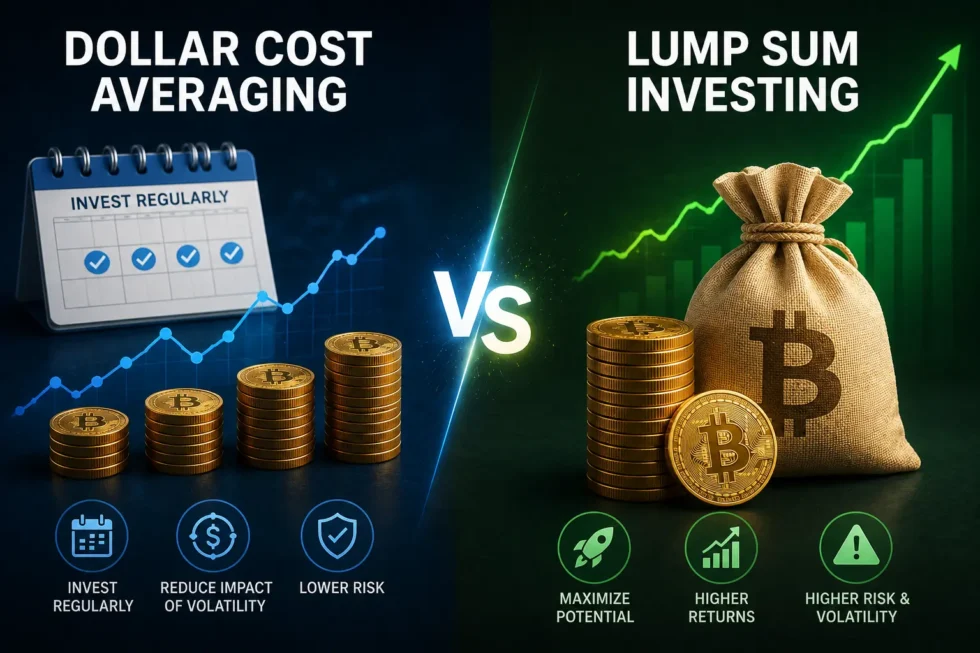
Dollar Cost Averaging vs Lump Sum Investing Which Wins in Crypto
Choosing how to invest can feel just as hard as choosing what to invest in. Dollar cost averaging vs lump sum investing is one of the biggest decisions new crypto buyers face, and picking the wrong approach can hurt both your returns and your peace of mind. This guide compares both strategies so you can decide which fits your crypto goals.
Before diving in, make sure you’ve sorted out your starting budget. Our article on how much beginners should invest in crypto explains how to size your first purchase safely.
What Is Dollar Cost Averaging in Crypto Investing?
Dollar cost averaging, often shortened to DCA, means investing a fixed amount at regular intervals. Instead of buying all at once, you might invest $100 every week regardless of price.
This method removes emotion from the equation. You buy more coins when prices drop and fewer when prices rise, which smooths your average purchase cost over time.
How Dollar Cost Averaging Reduces Timing Risk
Nobody can predict crypto price movements with certainty, not even professional traders. Spreading purchases across weeks or months protects you from buying everything right before a crash.
Consistency matters more than perfect timing here. A steady DCA schedule builds discipline and removes the stress of watching charts every day.
What Is Lump Sum Investing in Crypto?
Lump sum investing means putting your entire investment amount into the market at once. If you have $5,000 to invest, you’d buy that full amount today rather than spreading it out.
This approach works best when you believe prices will rise steadily from your entry point. It maximizes your time in the market, which historically benefits long-term investors.
The Case for Investing All at Once
Markets tend to trend upward over long periods, despite short-term volatility. Statistically, lump sum investing often outperforms dollar cost averaging simply because more money stays invested for longer.
Waiting to invest also carries a hidden cost. Cash sitting on the sidelines misses potential growth, and that opportunity cost adds up over months or years.
Dollar Cost Averaging vs Lump Sum Investing: Key Differences
| Factor | Dollar Cost Averaging | Lump Sum Investing |
|---|---|---|
| Emotional stress | Lower | Higher |
| Timing risk | Reduced | Concentrated |
| Historical returns | Often slightly lower | Often slightly higher |
| Best for | Volatile, uncertain markets | Confident, long-term believers |
| Ideal investor | Beginners, cautious investors | Experienced, risk-tolerant investors |
Neither strategy is universally correct. Your personal risk tolerance and market outlook should guide the decision, not general statistics alone.
Which Crypto Investment Strategy Suits Beginners Best?
Why New Investors Often Prefer Averaging In
Beginners frequently lack experience handling sharp price swings. Watching a lump sum investment drop 20% in a week can trigger panic selling, locking in losses permanently.
Dollar cost averaging softens this emotional impact. Smaller, regular purchases feel less risky, which helps new investors stay committed during downturns instead of abandoning their plan.
When a Lump Sum Approach Makes Sense
Experienced investors with a longer time horizon sometimes prefer lump sum investing. If you’ve already built financial stability and understand crypto volatility, deploying capital immediately can capture more upside.
A hybrid approach also works well for many people. You might invest half your budget immediately, then dollar cost average the remainder over several months.
Common Mistakes When Choosing Between These Strategies
Many beginners switch strategies mid-course after seeing short-term losses, which undermines both approaches. Consistency matters more than which method you initially choose.
Another mistake involves ignoring your overall portfolio strategy. Neither DCA nor lump sum investing should happen in isolation from your broader financial plan. For guidance on building that plan properly, review how to start investing in cryptocurrency without making expensive beginner mistakes.
Combining Your Strategy With a Diversified Portfolio
Whichever method you choose, remember that timing strategy and asset allocation solve different problems. Dollar cost averaging vs lump sum investing addresses when to buy, while diversification addresses what to buy.
Our complete resource, The Smart Crypto Investing Blueprint 2026: Building a Diversified Digital Asset Portfolio with Lower Risk and Higher Long-Term Growth, covers how to combine smart timing with proper diversification for stronger long-term results.
Final Verdict: DCA or Lump Sum for Crypto?
There’s no single winner in the dollar cost averaging vs lump sum investing debate. Choose dollar cost averaging if volatility makes you anxious or your budget arrives gradually through paychecks. Choose lump sum investing if you have capital ready now and can tolerate short-term swings.
Whichever path you take, staying invested consistently matters more than perfecting your entry timing. Explore our Smart Crypto Investing Blueprint to build a complete strategy around your chosen approach.