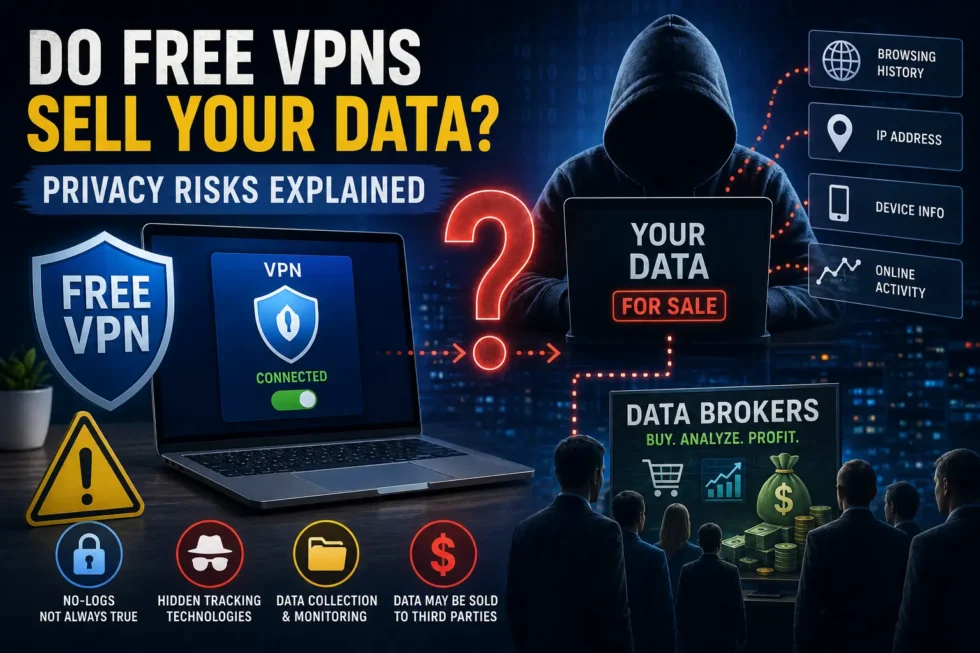
Do Free VPNs Sell Your Data Privacy Risks Explained
Do free VPNs sell data behind the scenes while promising to protect it? That question sits at the heart of one of the biggest myths in online privacy. Millions of people install a free VPN expecting anonymity, only to hand over browsing habits, device details, and location history to companies that monetize exactly what users tried to hide. This article breaks down how free VPN providers really make money, which companies have been caught selling user data, and how to spot a free VPN that treats your privacy as a product rather than a promise.
For a broader look at how free VPNs stack up on speed, streaming, and overall security, check out our Free VPN Complete Guide (2026). If you want a deeper dive into logging policies and encryption standards, our cluster article on whether a free VPN is safe covers those topics in detail.
How Do Free VPNs Make Money If They’re Free?
Running VPN servers costs money. Bandwidth, infrastructure, and app maintenance all carry real expenses, so a “free” service still needs revenue somewhere. Three common models fund most free VPN apps: advertising, freemium upgrades, and data monetization.
Ad-supported free VPNs insert banners or interstitial ads into your browsing session. Freemium models limit speed or data caps, then push you toward a paid tier. Data monetization is the riskiest model, and it’s the one that answers our core question most directly: some free VPN companies collect and sell user data to advertisers, analytics firms, or data brokers.
Not every free VPN sells information, but the incentive structure makes it tempting. When a company can’t charge subscribers, user data itself becomes a product worth selling.
Do Free VPNs Sell Data? What the Research Shows
Independent researchers have repeatedly tested free VPN apps and found troubling patterns. Studies from university teams and cybersecurity firms show that a significant share of free VPN apps embed third-party trackers, request excessive permissions, or transmit data to servers outside their stated privacy policy.
Free VPN Data Logging Practices
Many free VPN providers log more than they admit. Connection timestamps, IP addresses, device identifiers, and even DNS queries often get recorded despite marketing claims of a “no-logs” policy. Logged data becomes valuable once it’s aggregated and sold to advertising networks that build user profiles for targeted marketing.
A privacy policy buried in legal language rarely stops this practice. Users skim past clauses that grant broad rights to “share data with partners” or “improve services through analytics,” unaware those phrases often permit data sales.
Real Cases of Free VPN Providers Selling User Data
Several free VPN brands have faced public scrutiny for selling or mishandling user data. Regulators fined one major provider for logging browsing activity while advertising a strict no-logs policy. Security researchers exposed another free VPN for leaking millions of user records through an unsecured database, later linking the company to a broader data-broker network.
These cases share a pattern: free access, vague privacy language, and a business model that depends on data as revenue. Reviewing a provider’s ownership, jurisdiction, and independent audit history helps you avoid repeating these mistakes.
What Types of Data Can Free VPNs Collect and Sell?
Free VPN apps can gather far more than your IP address. Understanding the categories helps you evaluate risk before installing any app.
- Browsing history — websites visited, search queries, and time spent on pages
- Device information — operating system, hardware model, and unique device identifiers
- Connection metadata — timestamps, session duration, and bandwidth usage
- Location data — approximate or precise GPS coordinates from mobile permissions
- Account details — email addresses and payment information from upgrade prompts
Each category carries commercial value. Advertisers pay for behavioral profiles, data brokers pay for location patterns, and analytics firms pay for aggregated usage trends. A free VPN that sells any of these categories undermines the entire purpose of using a VPN in the first place.
Signs Your Free VPN Might Be Selling Your Information
A few warning signs tend to appear across free VPN apps that monetize user data. Watch for these red flags before you trust a provider with your traffic.
The app requests permissions unrelated to VPN functionality, such as access to contacts or call logs. The privacy policy uses vague language about “sharing with trusted partners” instead of naming specific third parties. The company has no independent security audit, no transparency report, and no clear ownership structure. Reviews mention unexpected ads, slow speeds tied to data harvesting, or unexplained battery drain from background tracking.
Any single sign doesn’t confirm wrongdoing, but multiple red flags together suggest the provider prioritizes revenue over user privacy.
How to Choose a Free VPN That Doesn’t Sell Data
Finding a trustworthy free VPN requires more scrutiny than picking a paid subscription. Start by reading the privacy policy directly rather than relying on marketing copy. Look for providers that publish independent audit results, since third-party verification carries far more weight than self-reported claims.
Favor apps with a clearly stated business model, whether that’s a freemium upgrade path or limited advertising, over apps with no visible revenue source. Check the company’s jurisdiction too, because privacy laws vary widely and some regions offer stronger legal protection against forced data disclosure.
Our pillar guide on the best free VPNs of 2026 ranks providers based on these exact criteria, alongside speed, streaming access, and gaming performance.
Free VPN vs Paid VPN: Data Privacy Comparison
Paid VPN services generally offer stronger privacy guarantees because subscription revenue removes the incentive to sell data. That said, price alone doesn’t guarantee safety. Some paid providers have faced their own logging controversies, so due diligence matters regardless of cost.
| Factor | Free VPN | Paid VPN |
|---|---|---|
| Primary revenue source | Ads, data sales, upgrades | Subscriptions |
| Logging transparency | Often inconsistent | Usually audited |
| Server network size | Limited | Typically larger |
| Data-sale risk | Higher | Lower, but not zero |
Choosing between the two depends on your risk tolerance and how often you handle sensitive information online. Our cluster article on whether a free VPN is safe walks through additional factors like encryption strength and kill-switch reliability.
Final Thoughts on Free VPN Data Privacy
So, do free VPNs sell data? Some do, and the practice remains widespread enough to warrant real caution. The safest approach combines careful research, skepticism toward vague privacy policies, and a preference for providers with independent audits.
For a complete comparison of the safest and fastest options available this year, return to our Free VPN Complete Guide (2026), which ranks providers across privacy, speed, streaming, and gaming performance.