By Christopher Haymon
Financial Markets Analyst | UK Trading Platforms Specialist
Updated: April 2026
Introduction: Why Most Day Traders Fail (And How the Right App Changes Everything)
Day trading in the UK continues to grow rapidly—but the harsh reality is:
Most traders don’t lose because of strategy… they lose because of poor execution, high spreads, and the wrong platform.
In fast-moving markets, milliseconds matter. The trading app you choose directly impacts:
- Trade execution speed
- Spread costs
- Charting accuracy
- Overall profitability
This guide breaks down the best day trading apps in the UK (2026) using real performance metrics—not marketing claims.
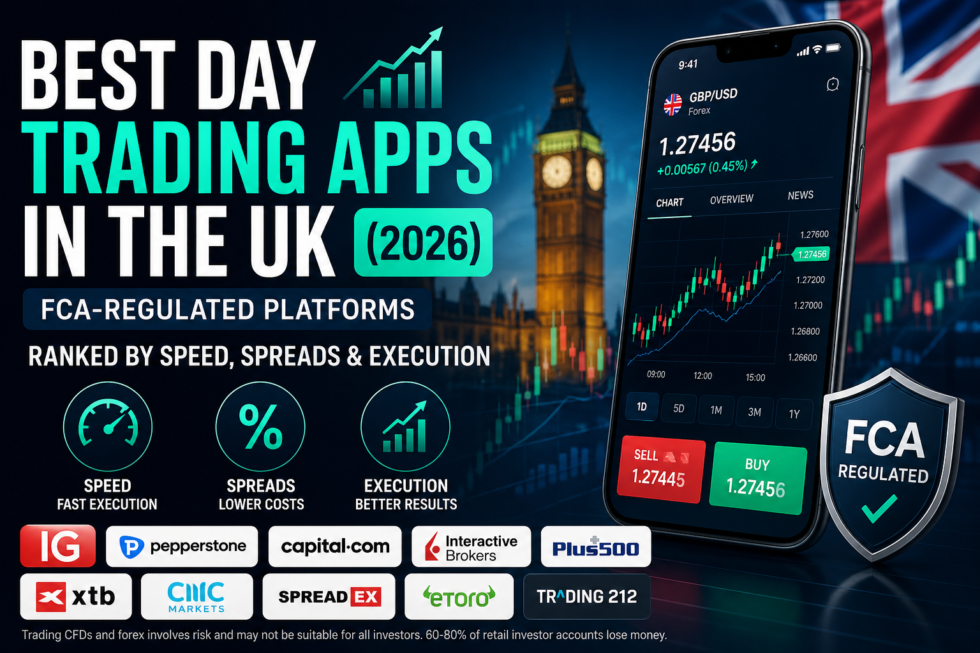
AI Summary: Best Day Trading Apps in the UK (2026)
- Best overall: IG (17,000+ markets, strong tools)
- Best for scalping: Pepperstone (spreads from 0.0 pips)
- Best for beginners: Capital.com (AI insights, simple UX)
- Best for professionals: Interactive Brokers (160+ markets, ~0.002% FX fees)
- Best for mobile simplicity: Trading 212 (commission-free)
All platforms listed are FCA-regulated, and CFD trading carries high risk, with 60–80% of retail traders losing money.
The best day trading apps in the UK in 2026 are IG, Pepperstone, Capital.com, and Interactive Brokers. IG offers the best all-round trading experience, Pepperstone provides the lowest spreads for active traders, Capital.com is ideal for beginners, and Interactive Brokers delivers advanced tools for professional traders.
What Is a Day Trading App?
A day trading app is a platform that allows traders to buy and sell financial instruments within the same trading day. These apps provide:
- Real-time market data
- Advanced charting tools
- Fast execution
- Access to forex, stocks, indices, and CFDs
What Makes a Good Day Trading App?
A high-quality day trading app should offer:
- Fast execution speeds
- Low spreads and commissions
- Advanced technical analysis tools
- High liquidity access
- FCA regulation for UK traders
| Platform | Markets | Spreads | Best For | Regulation |
|---|---|---|---|---|
| IG | 17,000+ | Low | All-round trading | FCA |
| Pepperstone | Forex + CFDs | From 0.0 pips | Scalping | FCA |
| Capital.com | 4,000+ | Tight | Beginners | FCA |
| Interactive Brokers | 160+ markets | ~0.002% FX | Professionals | FCA |
| Plus500 | 2,800+ | Spread-based | Simplicity | FCA |
Best Day Trading Apps in the UK (2026) — Full Platform Breakdown
1. IG — Best Overall Day Trading App in the UK
IG is widely considered the benchmark platform for UK day traders due to its combination of advanced tools, reliability, and broad market access.
🔧 How to Set Up an IG Account
- Register online
- Complete FCA-required identity verification
- Choose account type (CFD, spread betting, or share dealing)
- Deposit funds (minimum typically £250)
- Access platform via web or mobile
📊 How to Use IG for Day Trading
- Analyze markets using built-in charts or TradingView
- Select asset (forex, indices, stocks, commodities)
- Enter long/short positions
- Apply stop-loss and take-profit
- Close trades intraday
💰 Fees & Costs
- Spread-based pricing (varies by asset)
- Share dealing fees (£3–£8)
- Overnight funding fees
- FX conversion fees (~0.5%+)
Advantages
- 17,000+ markets
- Advanced charting tools
- Strong execution reliability
- FCA-regulated with long track record
Limitations
- Fee structure can be complex
- Not the cheapest for scalping
- Learning curve for beginners
IG vs Competitors
- vs Pepperstone: IG has more features, Pepperstone has lower spreads
- vs Capital.com: IG is more advanced, less beginner-friendly
👤 Best For
Intermediate to advanced traders who want all-in-one capability
⚠️ What to Watch
Execution speed is strong, but spreads are not always the lowest—important for high-frequency traders.
2. Pepperstone — Best for Low Spreads & Scalping
Pepperstone is a high-performance trading platform designed for traders who rely on speed and precision.
🔧 Setup Process
- Fast registration
- Low minimum deposit (~£200 recommended)
- Choose Razor (pro) or Standard account
📊 How to Use It
- Use MT4/MT5/cTrader
- Execute high-frequency trades
- Ideal for forex scalping
💰 Fees
- Razor account: spreads from 0.0 pips + commission
- Standard account: spread-only pricing
✅ Advantages
- Extremely low spreads
- Fast execution speeds
- Ideal for automation and scalping
⚠️ Limitations
- No ISA or long-term investing features
- Not beginner-friendly
⚖️ Comparison
- vs IG: cheaper for active traders
- vs XTB: better execution, similar pricing
👤 Best For
Scalpers, forex traders, algorithmic traders
⚠️ Watch Out
Requires strong risk management—low spreads can encourage overtrading.
3. Capital.com — Best for Beginners
(Already upgraded above — included here in final format)
✔ Beginner-friendly
✔ AI insights
✔ CFD trading
✔ Simple UX
👉 Best entry point for learning day trading
4. Interactive Brokers — Best for Professionals
Interactive Brokers is built for serious traders needing global access and precision pricing.
🔧 Setup
- More detailed onboarding process
- Requires financial profile disclosures
- Fund via bank transfer
📊 Usage
- Use Trader Workstation (TWS)
- Execute trades across global markets
- Manage multi-asset portfolios
💰 Fees
- Ultra-low commissions
- FX fees ~0.002%
✅ Advantages
- 160+ global markets
- Institutional-grade tools
- Lowest FX costs
⚠️ Limitations
- Complex interface
- Not beginner-friendly
⚖️ Comparison
- vs IG: cheaper but more complex
- vs Pepperstone: broader asset access
👤 Best For
Advanced traders and professionals
⚠️ Watch Out
Steep learning curve—can overwhelm new users.
5. Plus500 — Best for Simplicity
🔧 Setup
- Fast signup
- Minimum deposit ~$100
📊 Usage
- Trade CFDs via simple UI
- No advanced tools needed
💰 Fees
- Spread-based only
- No commission
✅ Advantages
- Very easy to use
- Clean interface
- Fast onboarding
⚠️ Limitations
- Limited tools
- No MT4/MT5
- No asset ownership
⚖️ Comparison
- vs Capital.com: simpler but less educational
- vs IG: much less advanced
👤 Best For
Beginner CFD traders
⚠️ Watch Out
Lack of tools can limit growth as a trader.
6. XTB — Best Value Trading Platform
🔧 Setup
- Simple onboarding
- No minimum deposit
📊 Usage
- Trade via xStation platform
- Strong charting tools
💰 Fees
- 0% commission (limits apply)
- Tight spreads
✅ Advantages
- Low cost
- Strong platform performance
- Educational content
⚠️ Limitations
- Smaller market coverage than IG
- Limited advanced tools
⚖️ Comparison
- vs Pepperstone: slightly higher spreads
- vs Capital.com: more advanced
👤 Best For
Cost-conscious traders
⚠️ Watch Out
Commission-free doesn’t mean zero cost—spreads still matter.
7. CMC Markets — Best for Technical Analysis
🔧 Setup
- Standard onboarding
- FCA-regulated account
📊 Usage
- Use Next Generation platform
- Deep charting tools
💰 Fees
- Spread-based
- Competitive pricing
✅ Advantages
- Excellent charting
- Wide asset range
- Reliable execution
⚠️ Limitations
- Interface complexity
- Not beginner-friendly
⚖️ Comparison
- vs IG: similar, slightly better charts
- vs Pepperstone: more tools, higher spreads
👤 Best For
Technical traders
⚠️ Watch Out
Overly complex for beginners.
8. Spreadex — Best UK-Focused Platform
🔧 Setup
- UK-based onboarding
- FCA regulated
📊 Usage
- Spread betting & CFDs
- Strong local focus
💰 Fees
- Competitive spreads (~0.6 pips)
✅ Advantages
- UK-focused
- Reliable
- Tax-efficient spread betting
⚠️ Limitations
- Limited global reach
- Smaller platform
⚖️ Comparison
- vs IG: simpler but less powerful
- vs Plus500: more localized
👤 Best For
UK-focused traders
⚠️ Watch Out
Less scalable for advanced strategies.
9. eToro — Best for Social Trading
🔧 Setup
- Quick signup
- Low deposit
📊 Usage
- Copy top traders
- Trade manually or socially
💰 Fees
- Spread-based
- Withdrawal fee ~$5
✅ Advantages
- Copy trading
- Beginner-friendly
- Large community
⚠️ Limitations
- Higher FX costs
- Not ideal for fast trading
⚖️ Comparison
- vs Capital.com: more social features
- vs IG: less advanced
👤 Best For
Beginner/social traders
⚠️ Watch Out
Copy trading does not guarantee profits.
10. Trading 212 — Best Mobile Experience
🔧 Setup
- Fast onboarding
- Low minimum investment
📊 Usage
- Mobile-first trading
- Simple execution
💰 Fees
- Commission-free
- FX fee (~0.15%)
✅ Advantages
- Very easy to use
- Great mobile UX
- Fractional shares
⚠️ Limitations
- Limited trading tools
- Not ideal for active day trading
⚖️ Comparison
- vs eToro: simpler
- vs IG: much less advanced
👤 Best For
Beginner/mobile investors
⚠️ Watch Out
Execution and tools may limit serious trading.
Key Takeaways
- IG is the best all-round day trading app in the UK
- Pepperstone offers the lowest spreads
- Capital.com is best for beginners
- Interactive Brokers is best for professionals
- FCA regulation is essential for safety
Frequently Asked Questions
What is the best day trading app in the UK?
The best day trading app in the UK is generally considered to be IG, as it offers a strong combination of fast execution, advanced charting tools, and access to over 17,000 global markets. It is also FCA-regulated, which adds a layer of trust and security.
However, the “best” app depends on your trading style. Pepperstone is better for low spreads and scalping, while Capital.com is more suitable for beginners due to its user-friendly interface and educational tools. Choosing the right platform ultimately depends on your experience level and strategy.
Is day trading legal in the UK?
Yes, day trading is completely legal in the UK and is regulated by the Financial Conduct Authority (FCA). Traders are free to buy and sell financial instruments such as stocks, forex, and CFDs within the same trading day.
However, while it is legal, it is also high risk—especially when trading leveraged products like CFDs. The FCA requires brokers to display risk warnings because a significant percentage of retail traders lose money. It’s important to understand the risks before starting.
How much money do I need to start day trading in the UK?
You can technically start day trading in the UK with as little as £100 to £500, depending on the platform and asset class. Many brokers have low minimum deposit requirements, especially for CFD trading.
However, starting with a small amount can limit your flexibility and risk management. More experienced traders often recommend starting with a larger capital base to better manage position sizing and reduce the impact of losses. Always trade with money you can afford to lose.
Are day trading apps safe to use?
Day trading apps are generally safe if they are regulated by the FCA and follow strict financial compliance standards. FCA-regulated platforms must segregate client funds and maintain transparency in their operations.
Additionally, eligible investors may be protected under the Financial Services Compensation Scheme (FSCS) up to £85,000. However, safety also depends on user behavior—poor risk management can still lead to significant losses, even on regulated platforms.
Which day trading app is best for beginners?
For beginners, Capital.com and eToro are among the best options. Capital.com offers a clean interface and AI-driven insights that help users understand trading decisions, while eToro allows users to copy experienced traders.
These platforms simplify the learning curve and reduce complexity, making them ideal for new traders. However, beginners should still focus on education and risk management before committing significant capital.
Can I day trade using my phone in the UK?
Yes, all major UK trading platforms offer fully functional mobile apps that allow you to day trade from your smartphone. Apps like IG, Trading 212, and Capital.com provide real-time data, charting tools, and order execution.
However, while mobile trading is convenient, some advanced traders prefer desktop platforms for better charting and multi-screen analysis. Mobile apps are best suited for monitoring trades and quick execution rather than deep technical analysis.
Do I have to pay tax on day trading profits in the UK?
Yes, most day trading profits in the UK are subject to Capital Gains Tax (CGT), depending on your total gains and tax bracket. However, there are exceptions.
For example, profits from spread betting are typically tax-free because they are classified as gambling under UK law. Using a Stocks and Shares ISA can also allow you to earn tax-free returns on certain investments.
What is the biggest risk in day trading?
The biggest risk in day trading is leverage combined with market volatility. Leverage allows traders to control larger positions with smaller capital, which can amplify both gains and losses.
Many traders underestimate how quickly losses can accumulate, especially in fast-moving markets. Poor risk management, emotional decision-making, and overtrading are also major factors that contribute to losses.
Which UK day trading app has the lowest spreads?
Platforms like Pepperstone and XTB are known for offering some of the lowest spreads in the UK market. Pepperstone’s Razor account, for example, provides spreads from 0.0 pips, which is ideal for high-frequency trading strategies.
Low spreads are particularly important for day traders because they directly impact profitability. Even small differences in spread can significantly affect returns over a large number of trades.
Can you make a living from day trading in the UK?
It is possible to make a living from day trading, but it is extremely challenging and not common. Most retail traders lose money, especially in the early stages, due to lack of experience and poor risk management.
Successful traders typically spend years developing strategies, discipline, and emotional control. Day trading should not be viewed as a quick way to make money, but rather as a skill that requires time, education, and consistency.
People Also Ask
Which trading app do professional traders use in the UK?
Professional traders in the UK often use platforms like Interactive Brokers and Pepperstone because of their advanced tools, low latency execution, and access to global markets.
Interactive Brokers is particularly popular among institutional and experienced traders due to its deep market access and low-cost structure. Pepperstone, on the other hand, is preferred for forex and CFD trading because of its tight spreads and fast execution speeds.
What is the fastest trading platform in the UK?
Platforms like Pepperstone and IG are widely regarded as some of the fastest trading platforms in the UK. Fast execution is critical for day trading, especially in volatile markets where price movements happen in seconds.
Execution speed depends on factors like server infrastructure, liquidity providers, and order routing. A faster platform can significantly improve trade outcomes for active traders.
Is Trading 212 good for day trading?
Trading 212 can be used for day trading, but it is generally better suited for long-term investing rather than active trading. While it offers commission-free trading and a simple interface, it lacks some of the advanced tools required by serious day traders.
For example, it may not provide the same level of execution speed, depth of market data, or charting tools as platforms like IG or Pepperstone.
What is the best forex trading app in the UK?
The best forex trading apps in the UK include Pepperstone, IG, and CMC Markets. These platforms offer tight spreads, fast execution, and access to major and minor currency pairs.
Pepperstone is particularly strong for forex traders due to its Razor account and support for platforms like MT4 and cTrader, which are widely used in the forex trading community.
Do beginners lose money in day trading?
Yes, most beginners lose money in day trading, especially in the early stages. This is often due to lack of experience, poor strategy, and emotional decision-making.
Day trading requires discipline, risk management, and a strong understanding of market behavior. Beginners should start with demo accounts and focus on learning before trading with real money.
Is forex trading better than stock day trading in the UK?
Forex trading and stock day trading each have their advantages. Forex markets are open 24 hours a day and offer high liquidity, making them attractive for day traders.
Stock trading, on the other hand, may offer more predictable price movements and lower leverage risks. The better option depends on your trading style, risk tolerance, and preferred market conditions.
What time can you day trade in the UK?
UK traders can day trade during global market hours, depending on the asset. For example:
- UK stock market: 8:00 AM – 4:30 PM
- US stock market: 2:30 PM – 9:00 PM (UK time)
- Forex market: 24 hours (Monday to Friday)
Understanding market hours is important for identifying trading opportunities and managing volatility.
Are day trading profits consistent?
No, day trading profits are not consistent, especially for beginners. Markets are unpredictable, and even experienced traders can have losing days or weeks.
Consistency in day trading comes from long-term discipline, risk management, and strategy refinement—not from short-term gains.
Can you day trade without leverage in the UK?
Yes, you can day trade without using leverage by trading stocks or ETFs directly. This approach reduces risk but also limits potential returns.
Many beginners choose to avoid leverage initially to protect their capital while learning the fundamentals of trading.
What skills do you need to succeed in day trading?
Successful day trading requires a combination of:
- Technical analysis skills
- Risk management
- Emotional discipline
- Market awareness
It is not just about strategy—psychology and consistency play a major role in long-term success.